Kaitlin Rai, RCC, CCC (She/Her)
Complex trauma and relational therapy for individuals, teens, couples, and families in Surrey, Langley, and the Fraser Valley, including EMDR therapy and relational trauma work.

When you feel stuck in patterns that don't make sense, there’s usually a reason.
Maybe you've been trying to figure this out for years. Maybe you're only just starting to wonder if something deeper is going on. Maybe you've read about it, found yourself watching videos that finally named something you'd never had words for, or tried tools that made sense but didn't quite stick.
Or maybe you can't fully explain what's wrong. You just know something feels off in your relationships, in how you react, and in how a single look, tone, or reaction from someone else can send you somewhere you didn't want to go. You might notice how easily you get pulled into their emotional state, and how hard it is to explain why it hits so deeply. You might feel the gap between how capable you appear on the outside and how overwhelmed, empty, or barely holding on you actually feel.
Either way, something keeps not shifting. The same reactions. The same dynamics. The same feeling of being caught in something you can't quite get out of, no matter how much you understand it, or whether you have words for it yet at all.
Book a free consultation Complex trauma and relational therapy for individuals, couples & families · Surrey, Langley & Fraser Valley
I specialize in complex trauma and relational therapy, the kind of work that goes deeper than managing symptoms or learning new communication skills.
Many of the people I work with have been carrying something for a long time. They've often tried other things. What brings them here is the sense that something underneath hasn't shifted, and that whatever's happening now is connected to something older.
Specialization
-
when painful or overwhelming experiences happened repeatedly, in relationships, or early in life, often before you had the words, the safety, or even the understanding that what was happening wasn't okay.
-
when the same dynamics keep showing up in your relationships and you can see it happening but can't seem to stop it.
-
when conversations and conflicts keep going the same way and the real issues never quite get resolved.
-
when something has been building and the connection between parent and teen has broken down. I work with teens individually and do repair work between parents and teens when communication has stopped or the distance has grown.
-
When someone close to you is struggling and you're caught between wanting to help and not knowing what to do. The fear, the guilt, the frustration, the cycles, the picking up the pieces and all that comes with it.
-
including grief, attachment ruptures, reunification, adoption, and the kind of relational strain that builds when a family has been through something significant and needs space to repair and reconnect.
-
Who have spent years holding everything together on the outside while still wondering why nothing ever feels like enough.
-
when your reactions feel bigger than the situation, or something has shifted and you're trying to figure out who you are on the other side of it.
Who I Work With
-

Adults
-

Teens 14+
-

Families
-

Couples
For Individuals
“You don't have to have it together to walk through the door. Show up as you are.”
Many of the people I work with are high achievers. They might be capable, accomplished, or the person everyone else relies on. They've worked hard to build a life that looks like it's working seamlessly. but underneath that, there's an exhaustion that's hard to explain to people who haven't felt it. There’s a sense that no matter how much they do or achieve, it's never quite enough.
A lot of that makes sense when you look at where it came from. Many of my clients grew up with parents who, for whatever reason (their own unresolved pain, mental health struggles, addiction) weren't able to show up in the ways they needed. So they learned early that love and belonging had to be earned. That needing things was dangerous. That the safest thing was to be useful, capable, and undemanding. Those patterns made sense once, and now they show up everywhere. In relationships, in work, in how hard it is to rest, to ask for help, to ask for your needs to be met.
They've spent their lives feeling like they're too much or not enough, sometimes both at once. They worry about being a burden. They take on other people's needs before their own without even realising they're doing it. They react in ways they don't understand and then spend hours picking it apart. And they've gotten so good at keeping the mask on that taking it off, even in a therapy room, can feel almost impossible.
You don't need to come in with the right words, the right answers, or a clear sense of what your trauma even is. You don't need to perform wellness or have it figured out. You just need to show up, as you are, wherever that is.
A note on whether your experiences "count": many of the people I work with wonder if what they've been through is “bad enough” to come to therapy, or if they even have the right to call it trauma. In my experience, when we actually look at the full picture, the answer is almost always yes. You don't need to have the darkest story in the room for your pain to be real, or to deserve real support.
We might be a good therapeutic match if:
You feel like you're too much, or never quite enough, and have spent a long time trying to prove otherwise
You put other people's needs first, often without realising it until you're running on empty
You react in ways you don't understand, and the self-criticism that follows is exhausting
You keep finding yourself in the same relationship dynamics, even with different people
Your attachment patterns, anxious, avoidant, or somewhere in between, feel like something you're stuck with
There's a family relationship carrying a lot of unresolved weight, hurt, resentment, or a question of whether repair is even possible
You worry about being a burden, to the people in your life, and even to a therapist
You've gotten very good at appearing capable while feeling like you're barely holding it together inside
Someone close to you has struggled with addiction or mental health, and it's shaped you more than you've fully acknowledged
You question whether what you've been through is "bad enough," even when part of you knows it was
For Youth & Their Parents
“Something has shifted. And you're not sure how to reach them anymore, and you're worried”
If you’re a parent
You've watched your teenager pull away, from you, from school, from things they used to care about. Maybe they've stopped talking. Maybe you've found out something that scared you, signs of self-harm, or a sense that they're in more pain than they're letting on. You want to help but you don't know how to reach them without making things worse.
You're not looking for someone to fix your kid. You're looking for someone who can actually get through to them, and who can help you understand what's going on and how to support them without losing the relationship in the process.
We might be a good therapeutic match if:
Your teen has withdrawn, shut down, or stopped engaging with daily life
You're worried about self-harm, or have already found signs of it
School attendance has become a struggle, or has stopped altogether
You feel like you've lost the connection you had with them and don't know how to get it back
You're scared, and you don't know what the right next step is
If you're a young person
You don't have to have the words for what's going on. A lot of the teens I work with can't explain it. They just know something feels heavy, or wrong, or like too much. Or like nothing at all, which is its own kind of hard.
Maybe you've been through things that were never really talked about. Maybe the people who were supposed to take care of you couldn't, or didn't, because of their own struggles, their addiction, or just not being present in the ways you needed. Maybe you've been in situations, at home, in care, navigating systems, that left you carrying things nobody prepared you for.
You don't have to explain yourself before you feel ready. You don't have to be easy, or articulate, or okay. This is a space where that's okay.
We might be a good therapeutic match if:
You're dealing with things you don't know how to put into words
You've been through experiences that still feel present, even if they happened a while ago
You've grown up without consistent, safe support, or had to be the one taking care of everyone else
You've been hurting yourself as a way to cope, and part of you wants to find something different
You're not ready to talk to your parents about what's really going on, and that's okay for now
Therapy here isn't about getting you to open up on a timeline, or getting you to be someone you're not. It's about creating enough safety that something real can happen, at a pace that actually works for you.
For Families
“Someone is struggling. But it's rarely just one person's story”
Families are systems
By the time most families reach out, one person has usually been identified as "the problem”. This often looks like a teenager who's shut down or explosive, a parent who doesn’t know how to respond to their teen, an adult child who doesn’t know how to have a relationship with their parent who hurt them. It’s usually a dynamic that's become impossible to navigate. A family that loves each other but can't seem to stop hurting each other.
In my experience, what looks like one person's difficulty is almost always a signal from the whole system. The work isn't about fixing one person. It's about understanding the relational patterns that have formed, and creating the conditions for genuine repair and reconnection.
We might be a good therapeutic match if:
Your family is navigating trauma, loss, or major transitions, including grief, attachment ruptures, reunification, and adoption.
You're working through separation, divorce, or a significant family transition.
Substance use or addiction has shaped how your family connects and communicates.
You're in a post-adoption or attachment-focused context and need support that understands that complexity.
You want more than reduced conflict. You want real repair and stronger relationships over time.
This work is relational and depth-oriented. The goal isn't behaviour management. It's rebuilding trust and connection in a way that actually lasts.
“You care about each other a lot, but something keeps breaking down”
For Couples
Emotion Focused Couples Therapy
You find yourselves in the same argument on repeat, different trigger, same pattern. One of you pulls away. The other pushes harder. Or you've both gone quiet, and the distance between you keeps growing.
You're not here because you want a list of communication tips. You want to understand what's underneath the cycle, why it keeps happening, and what it would actually take to shift it. That usually means looking at what each of you brings into the room, the histories, the wounds, the attachment patterns that show up between you without either of you choosing them.
We might be a good therapeutic match if:
You keep cycling through the same conflict or disconnection, even after you've tried to repair
One or both of you brings a trauma history that shows up in the relationship in ways that are hard to name
You're navigating rupture, betrayal, or a loss of trust, and trying to find a way through
The emotional reactivity between you has made it hard to feel safe with each other
You feel more like you're managing the relationship than actually in it
Couples work here isn't just about tools to manage conflict better. It's about understanding what's driving it, and creating something between you that feels more honest, more connected, and more secure.
“Sometimes the most meaningful work happens outside the four walls of a therapy room”
Nature-Based Therapy
Nature-Based Therapy Sessions
I offer nature-based sessions for individuals, couples, and families, either as a standalone approach or woven into the work we're already doing together. Sessions can take place in local parks and green spaces, or further out in nature for day or multi-day intensives.
What is it?
Nature-based therapy is therapy that takes place outside, in natural settings rather than an office. It isn't about hiking or outdoor activities for their own sake. It's about using the natural environment intentionally as part of the therapeutic process, to support grounding, regulation, and deeper emotional work. Sessions are still conversational and relational — just with the added benefit of what nature brings to the space.
Why it works
Research backs what many people already feel intuitively. Time in nature lowers cortisol, reduces nervous system activation, and increases the capacity to regulate emotionally. For people navigating complex trauma, that matters. Trauma lives in the body and nervous system, and the natural environment offers something a therapy room often can't: a built-in invitation to settle, without having to try.
Nature-based therapy also pairs particularly well with EMDR and IFS. EMDR is most effective when the nervous system has enough capacity to process rather than just survive, and being outside can help create that. With IFS, clients often find it easier to access and sit with different parts of themselves when they're not in a clinical setting.
Who is it for
This approach tends to resonate with people who:
Find traditional therapy settings feel constraining or too clinical
Feel more like themselves when they're outside
Feel more emotionally-regulated when they’re in nature
Are working through grief, loss, or a significant life transition
Are a couple or family looking for a different kind of space to reconnect
Want to integrate movement and nature into intensive trauma work
Have tried talk therapy and feel like something is still missing
Ember offers full nature-based therapy assessments so that we can design a treatment plan that is right for your situation and comfortability. Reach out if you'd like to know more about what this could look like for you.
My Approach
People come in at all different places. Some have spent years in therapy or reading everything they can find. Others are only just starting to wonder if something deeper is going on. What they have in common is that something hasn't shifted yet, and they're ready to try something different.
I use EMDR, narrative therapy, and parts work drawn from Internal Family Systems, not as techniques to apply, but as ways of getting closer to where patterns are actually held. EMDR in particular goes beyond talking about what happened. It's a structured, evidence-based approach to trauma reprocessing that helps the brain and nervous system actually work through experiences that got stuck, so they stop driving your reactions in the present. Often this work also means getting to know the parts of you that developed for very real reasons, and building a different relationship with them rather than trying to shut them down or override them.
For couples and families, I also draw on Emotionally Focused Therapy and family systems approaches, which help us understand the cycles and relational patterns that form between people, not just within them.
The things about yourself that confuse or frustrate you most are usually the ones that made the most sense at some point. This work is about understanding them, not treating them as problems to fix.
My approach is also shaped by lived experience in many of the areas I specialize in. I bring that into the room not as a script, but as a deeper understanding of what this kind of work actually asks of a person, and what it means to move through it.
EMDR · Internal Family Systems · Emotionally Focused Therapy · Narrative therapy · Family systems · Nature-based · Complex & relational trauma
Specialized Work Experience: Frontline to Clinical
Before moving into private practice, I spent years working directly in community with youth and families in complex, high-risk situations, and this experience shapes everything about how I work today.
Youth and families have been at the centre of my work for a long time. My background includes gang prevention and intervention, anti-sexual exploitation response, and school-based consultation, working alongside the Ministry of Children and Family Development, the RCMP, Public Safety, and community organizations across the Fraser Valley.
That frontline experience gave me something clinical training alone couldn't. I know what it takes to build trust with young people who have every reason not to give it, and to support families navigating systems that weren't built for them. I bring that into this work as a foundation for how I see people in the context of their lived experiences.
About My Practice
About My Practice
Age Groups
Youth 14+
Young Adults
Adults
Trainings & Certifications
Narrative Therapy
EMDR Trained
EMDR & IFS Workshop
Emotionally Focused Couples Therapy (EFCT)
Certified in Nature-Based Therapy
Family Systems & Assessment
Populations
Youth, young adults, couples, families, first responders, human service providers, youth navigating the justice system, men and women of all genders and sexual orientations.
Rates
Individual Counselling (50 mins): $175
Youth Counselling (50 mins): $175
Couples Counselling (50 mins): $200
Couples Counselling (80 mins): $250
Family Counselling (50 mins): $250
Family Counselling (80 mins): $280
Individual Counselling Intensive (110 mins): $400
About Me
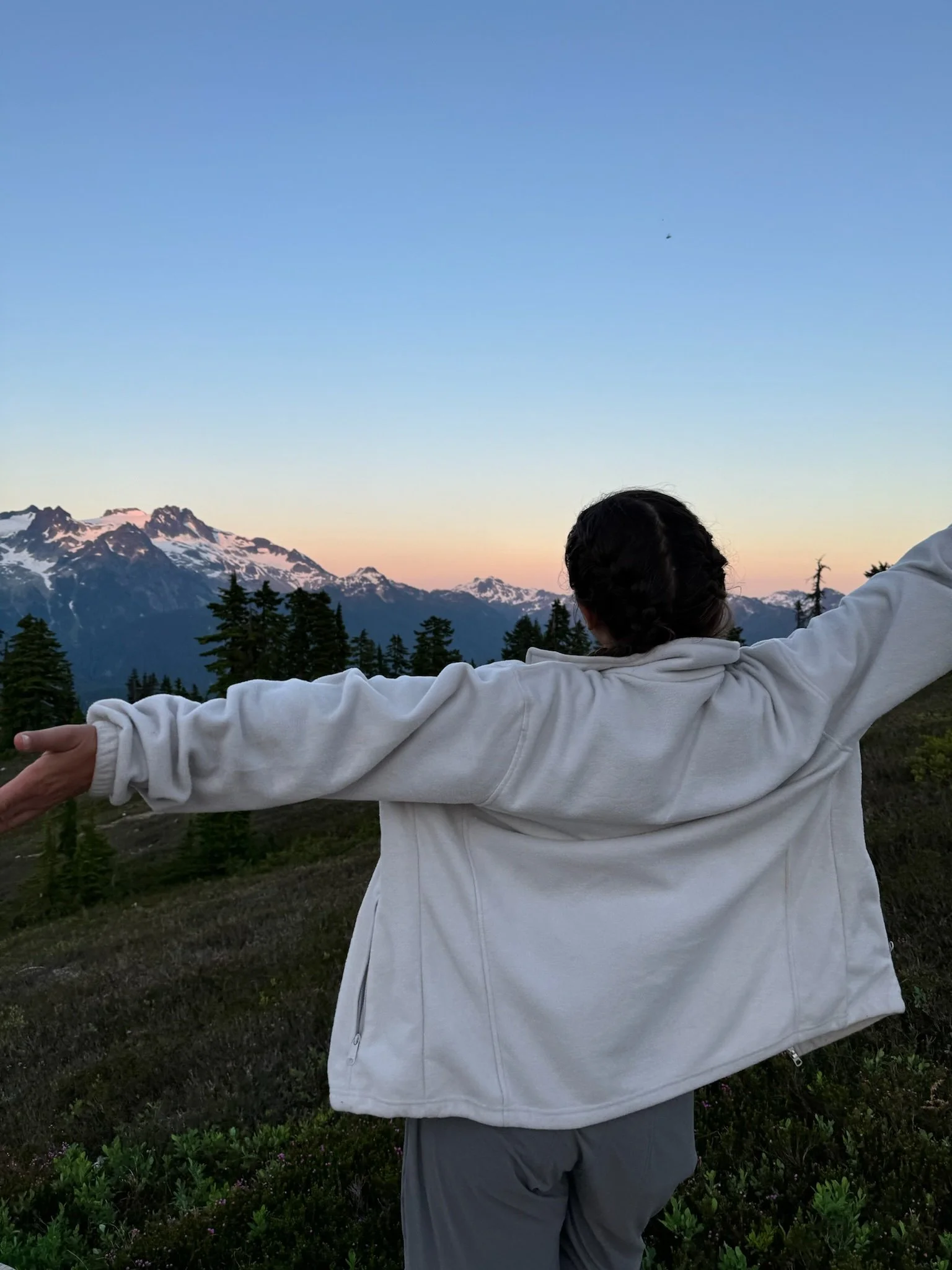
Hi, I’m Kaitlin. I would say I am equally happy wandering through shops as I am trekking through the mountains, which probably says a lot about my love of variety. I’m always up for an adventure, whether that’s exploring a new city, backpacking outdoors, camping, or just floating at the lake. I often get random cravings for bubble tea, chips or sour candy.
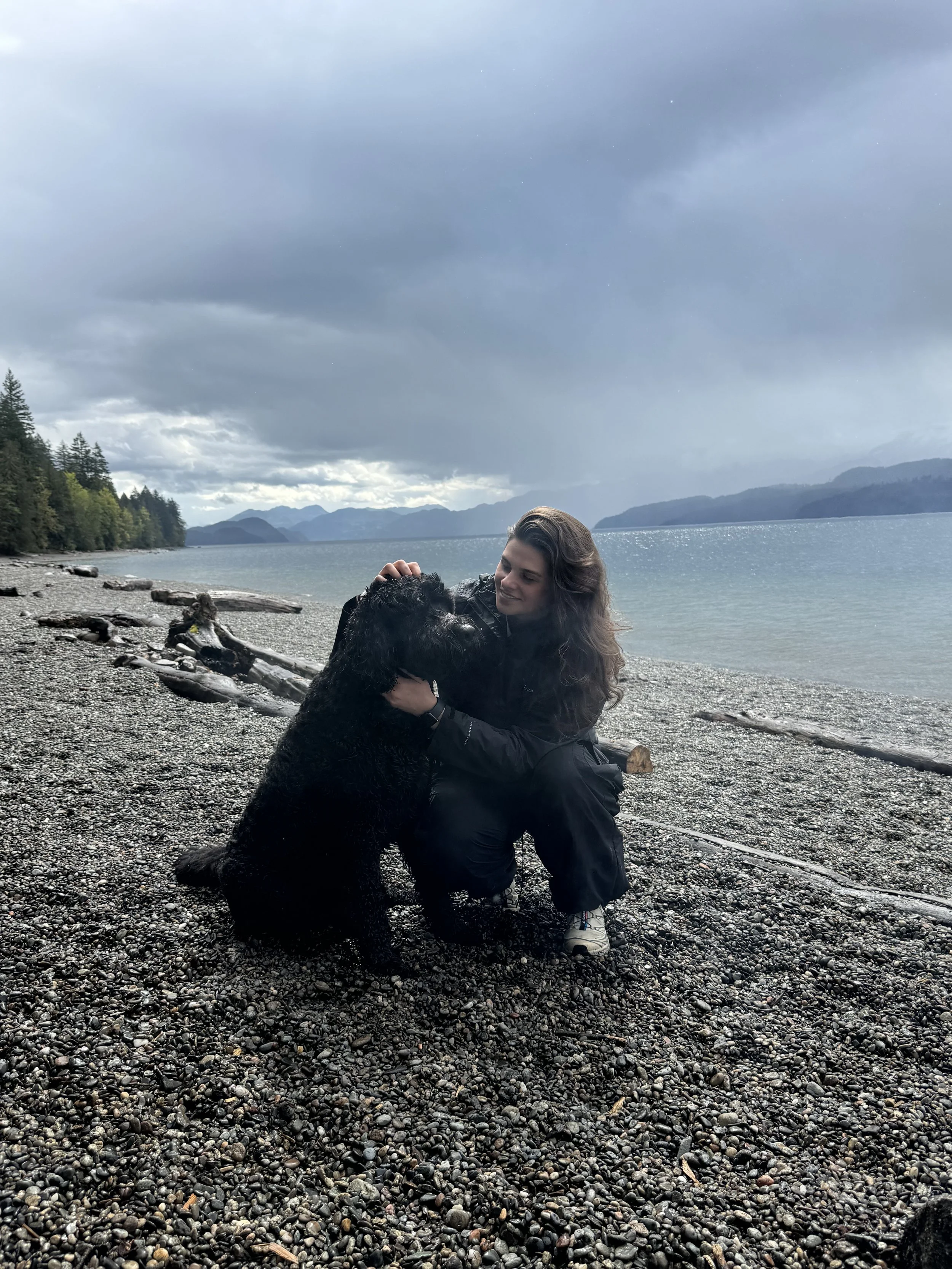
When I’m not out hiking or planning my next trip, you’ll usually find me with my dog, who runs my life. I love food, discovering new restaurants, and spending time with family and friends. Basically, I like hanging with my people, laughing, and eating good snacks.
My Adventures